Restaurants, bars, cafés, and food-service businesses invest heavily in branding. The establishment’s name, logo, menus, signage, packaging, social media presence, and delivery app identity all contribute to customer recognition and long-term market positioning. For this reason, register restaurant brand in the US is no longer merely a bureaucratic step, but a core element of legal and commercial protection.
A properly structured trademark strategy generally involves protecting the business name, logo, visual identity, and consistent use of those elements across physical and digital environments.
In the food and hospitality sector, brand recognition is often one of the business’s most valuable commercial assets.
Without adequate trademark protection, restaurants and bars may face unnecessary risks involving imitators, cease-and-desist claims, forced rebranding, or disputes with competing establishments.
Register Restaurant Brand in the US: Name Selection and Conflict Risks
The first step when registering a restaurant brand in the United States is selecting and evaluating the trade name. Many business owners choose names based only on domain availability or the absence of similar local restaurants. From a trademark perspective, however, this analysis is insufficient.
Before investing in signage, advertising, menus, uniforms, and digital campaigns, it is highly advisable to conduct a trademark clearance search through official databases, particularly the USPTO system.
A trademark search may help identify:
- existing federal trademark registrations;
- pending trademark applications;
- confusingly similar names in related restaurant or hospitality classes;
Critical Risks
- involving prior users or regional businesses.
⚠️ Warning: A restaurant may operate for months or years before discovering that another company already holds stronger trademark rights over a similar name.
Businesses that adopt names already associated with similar food services may later receive cease-and-desist letters, face litigation, or be forced to rebrand after substantial investment.
Distinctive names generally receive stronger legal protection. Generic or highly descriptive terms, on the other hand, often face greater obstacles during trademark examination and provide weaker exclusivity.
Register Restaurant Brand in the US: Logo, Identity, and Consistent Use
A restaurant’s identity extends beyond its name. Logos, typography, color schemes, graphic elements, packaging design, menus, uniforms, and signage all contribute to public recognition of the establishment.
Trademark protection may apply not only to the word mark itself but also to stylized logos and composite brand designs.
ℹ️ Info: Protecting both the name and visual identity can strengthen enforcement against businesses attempting to imitate the overall appearance of the brand.
This visual identity frequently appears across:
- storefront signage;
- food packaging;
- websites and delivery platforms;
- Instagram, TikTok, and social media campaigns;
- menus and promotional materials.
When a restaurant undergoes rebranding, remodeling, or expansion, it is important to verify whether the updated logo and visual presentation remain consistent with the registered trademark.
Critical Risks
- Significant differences between the registered logo and actual commercial use may weaken trademark enforcement in disputes.
Consistency of use is especially relevant in the hospitality industry, where consumers often recognize businesses visually before reading the establishment’s full name.
Florida vs Federal Trademark: What Changes for Restaurants and Bars
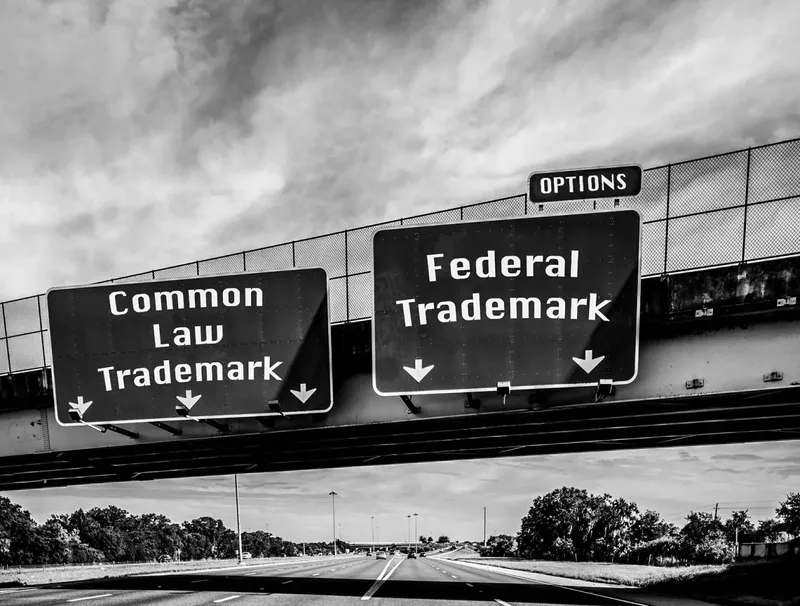
Restaurant owners in Florida often ask whether state-level trademark registration is sufficient or whether federal registration with the USPTO is necessary.
State trademark registration generally provides protection limited to Florida and may be suitable for small local businesses operating exclusively within the state.
Federal registration, by contrast, offers broader nationwide protection throughout the United States when interstate commerce requirements are satisfied.
ℹ️ Info: Restaurants with delivery app exposure, tourism-based clientele, franchise plans, or multi-state expansion often benefit more from federal trademark protection.
Federal registration also tends to provide stronger legal tools in disputes involving:
- online impersonation;
- infringing competitors;
- domain conflicts;
- digital marketplace confusion;
- unauthorized social media usage.
The appropriate strategy depends on the restaurant’s growth plans, geographic reach, and branding objectives.
Trademark Use on Delivery Apps and Digital Platforms
Today, many customers encounter a restaurant brand for the first time through delivery apps, Google searches, or social media platforms rather than through physical storefronts.
In these environments, restaurants compete side by side with numerous businesses, increasing the possibility of consumer confusion.
⚠️ Warning: Inconsistent trademark usage across delivery apps, websites, and social platforms may complicate enforcement efforts later.
From a trademark perspective, restaurants should strive to maintain consistent use of their registered name and logo across:
- Uber Eats and DoorDash profiles;
- Google Business listings;
- Instagram and TikTok accounts;
- official websites;
- online advertising campaigns.
Businesses holding trademark registrations are generally in a stronger position to challenge fake profiles, unauthorized listings, or confusingly similar digital uses.
Ignoring digital trademark protection may expose restaurants precisely where customer interaction is most frequent.
The Restaurant Brand as a Legal and Economic Asset
In the restaurant and hospitality industry, the brand is not merely a marketing element. It is a valuable legal and economic asset directly connected to reputation, customer loyalty, franchising potential, and long-term business value.
A strategic trademark plan typically includes:
- preliminary conflict analysis;
- selection of legally distinctive names;
- protection of logos and visual identity;
- evaluation of state versus federal registration;
- consistent use across digital and physical channels.
Preventive trademark strategy is usually less expensive and less disruptive than resolving disputes after a business has already grown.
— USPTO trademark standards and U.S. hospitality industry branding practices.
By registering a restaurant brand in the United States with proper legal guidance, restaurant and bar owners strengthen expansion opportunities, improve negotiating power with investors and partners, and reduce exposure to avoidable trademark conflicts.
Instead of reacting to legal problems after receiving a cease-and-desist letter, businesses that adopt preventive trademark protection can remain focused on customer experience, operational growth, and long-term brand value.